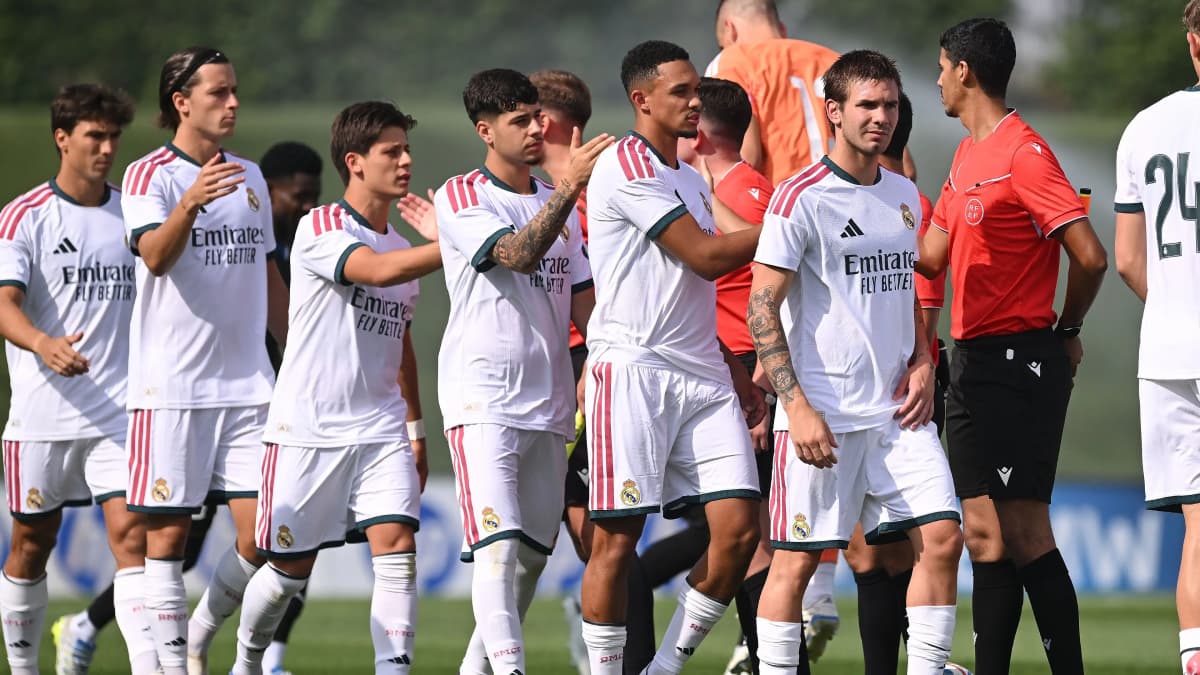
José Mourinho’s Real Madrid has already played two pre-season matches this summer, offering the first real clues about the Portuguese coach’s plans for his new-look side.
José Mourinho’s 2026 Real Madrid has now been back in training for two weeks. As the club’s World Cup stars gradually return to the squad, Los Blancos have already completed two pre-season friendlies against local opposition: a narrow 1-0 victory over Alcorcón, followed by an emphatic 4-1 win against Segunda División side Leganés on Tuesday evening.
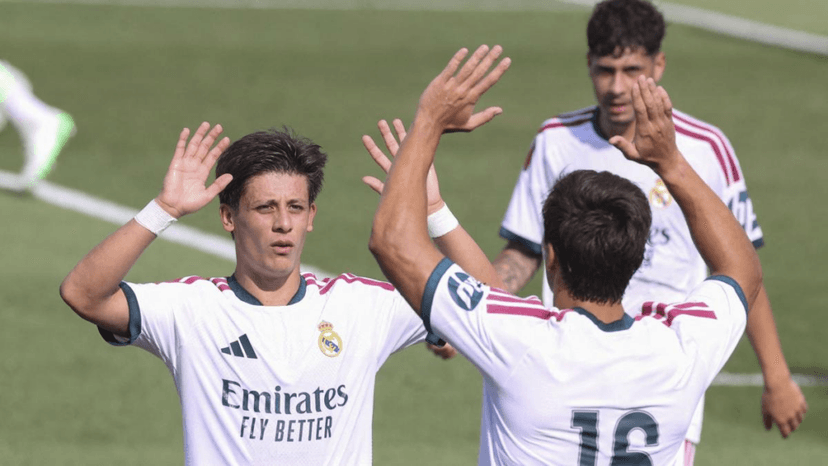
The two matches have given Mourinho the opportunity to assess several academy prospects as well as players fighting to prove themselves. Among them was Franco Mastantuono, who failed to make a significant impact against Leganés and did little to strengthen his case for a prominent role this season.
As expected, the Portuguese manager has opted for a traditional 4-2-3-1 formation, a system that the Madrid press had been predicting for weeks. Against Leganés, Eduardo Camavinga and Federico Valverde operated as the double pivot, while Arda Güler played in the No. 10 role ahead of them.
In possession, Real Madrid relied heavily on wide play, with the wingers stretching the pitch and creating space through the flanks. The attacking midfielder—occupied by Güler but widely expected to belong to Jude Bellingham once he returns—was given complete freedom to roam between the lines. The Turkish international was arguably the standout performer against Leganés, impressing with his creativity and movement. Apart from the No. 10 position, however, the players largely maintained their tactical discipline, with very little positional rotation or unnecessary drifting.
Classic Mourinho
Another aspect that came as no surprise was Mourinho’s desire to move the ball forward as quickly as possible after winning possession. His team played direct football, looking to launch attacks immediately after recovering the ball—an approach that should perfectly suit Madrid’s star attackers once they return to full fitness.
Camavinga also delivered an encouraging performance despite ongoing speculation suggesting he may not feature prominently in the club’s long-term plans.
Without the ball, Real Madrid looked aggressive, organized, and highly committed defensively. The arrival of a new manager has undoubtedly injected fresh motivation into the squad, but Mourinho has already made one principle abundantly clear: defensive work is non-negotiable. Every player is expected to contribute when the team loses possession.
Madrid applied a relatively high press, focusing more on cutting passing lanes and anticipating opposition movements than on engaging in constant physical duels. The objective was simple: recover possession quickly and transition into attack with minimal delay.
🚨 José Mourinho VEUT un défenseur central si Raúl Asencio QUITTE le club. ✅🛡️
— RMadrid actu 🇫🇷 (@RMadrid_actu) July 29, 2026
👀 Bastoni et Laporte se sont OFFERTS au club. Ils veulent VENIR.
🎯 L'agent Jorge Mendes a PROPOSÉ Antonio Silva et Leny Yoro.
⌛️ AUCUNE PISTE n'est avancée à ce jour. @ACTUSRMCF pic.twitter.com/ODFAGhqnLJ
Contrary to the expectations of some observers—although the level of opposition should certainly be taken into account—Mourinho’s Real Madrid does not appear set to become an ultra-defensive side. Instead, the early signs point toward a team built on the hallmarks that defined Mourinho’s greatest sides: tactical discipline, collective intensity, and unwavering commitment.
These are qualities that many supporters believe have been lacking at the Santiago Bernabéu in recent seasons. The real challenge, however, will be maintaining the same level of intensity and defensive commitment once the established starters and global superstars return to the lineup.
Saturday’s friendly against Fiorentina will provide another valuable opportunity to see how Mourinho’s new Real Madrid continues to take shape.
Comments
No comments yet. Be the first to react.